

Blue & Gold’s Anya Le Monnier empowering young female athletes to understand their bodies and importance of ‘eating to train’
“My aim is to help young female athletes understand the power of their bodies and what is happening with their physiology, so they have the knowledge to fuel their training correctly, manage their menstrual cycles and understand how it can impact their sport.”
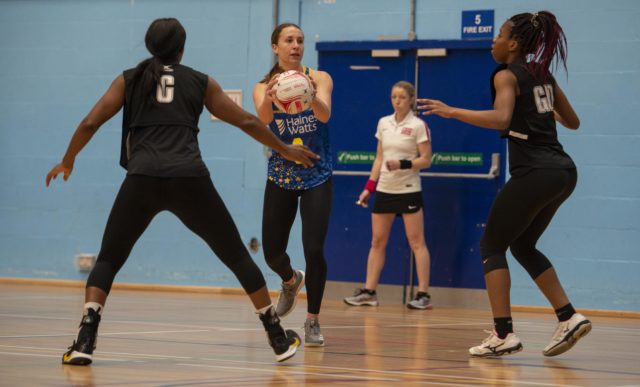
Anya Le Monnier, a training partner with Team Bath Netball’s Superleague squad and assistant coach of the U19s, is running a series of empowering workshops with the next generation of Blue & Gold netballers designed to give them the confidence to understand their bodies and spot the warning signs when things aren’t right.
She has first-hand experience of what can happen when young women don’t take on enough energy to fuel both their training and personal development. As a teenage netballer working hard to pursue her dream of a Superleague career, Anya suffered a stress fracture in her foot and was subsequently found to have Relative Energy Deficiency in Sport (RED-s) Syndrome.
The syndrome occurs when athletes don’t take on enough fuel to meet their training demands. In women that low energy availability can lead to missed periods and disrupt the production of oestrogen, which is essential for maintaining bone density.
“When I suffered with RED-s I hadn’t had the education I’m trying to give the young girls now,” said Anya, who has put together a series of presentations for Team Bath’s Academy, U19 and U21 players entitled ‘Eating to Train and Managing Your Menstrual Cycles’.
“I didn’t understand my body enough to spot the key warning signs that something wasn’t right. When you don’t have that knowledge, you can’t correct things early enough and that led to me having my stress fracture.
“The main warning sign for female athletes, and the one I’m trying to get across, is the fact that a missed period is not normal. Menstrual cycles have been treated as a taboo issue in sport for a long time and not spoken about enough for something that happens to a woman every month.
“If a female athlete misses a period, it is a key sign that their body is not coping either with the amount of training they are doing or they are not getting the right nutrition. That tells you that you need to seek advice and look at what could be going wrong.
“Eating to train and managing your menstrual cycle are really closely linked. When you are not fuelling enough for the amount of training you are doing, it can lead to your menstrual cycle stopping but a lot of messages that girls get from social media is about being in a calorie deficit and looking a certain way physically.
“For athletes, that’s not going to be sustainable to have a healthy lifestyle. Ultimately your body is going to need different nutrition to your friends who aren’t training the same way as you.”
Anya has done three online sessions with the Academy and NPL (National Performance League) age-group squads so far and is pleased with the response of the young netballers, who are aged between 16 and 21.
“I’ve given them the chance to ask questions at the end of the sessions or individually and the feedback I’ve had from the girls has been really great,” said Le Monnier, who studied Sports Performance at the University of Bath and is now taking a Masters in Performance Coaching.
“It seems a number of them have been struggling with this but not had the confidence or opportunity to speak up about it. By one person opening up the conversation and showing them it is OK to talk, a lot of them have found that confidence to get some advice.
“Giving the girls this platform and education about their bodies means they have the power and confidence to talk about things. It is about having body literacy and body confidence, so they know they can perform to their best and are valued within their sporting environment but also that they have confidence in their everyday lives.
“As a Superleague team and role models in our sport, we can share our stories and show girls that, firstly, they are not alone in their experiences and, secondly, they can carry on in their sport despite all the changes happening in their body, that actually a lot of these changes are really positive things that will help with your sport and performance.”
For more information about Relative Energy Deficiency in Sport (RED-s) Syndrome, visit https://trainbrave.org or https://www.thewell-hq.com.